

The honest answer is a balanced one – sometimes, but not always. Pets can be a trigger for some people with eczema, but they’re certainly not off‑limits for everyone. At Eczema Clothing, we’ve lived this question ourselves and heard it countless times from our community. In this article, we explore the relationship between pets, allergies and eczema, share real experiences, and offer practical, skin‑kind ways to live comfortably with animals at home.
Why can pets affect eczema?
Eczema (also known as atopic dermatitis) is closely linked to the immune system and the skin’s barrier function. When that barrier is compromised, the skin becomes more reactive to irritants and allergens in the environment – and pets are one possible source.
It’s not actually pet fur itself that usually causes the problem, but pet dander – tiny flakes of skin shed by animals such as cats, dogs and rabbits. Dander can linger in the air, cling to fabrics and settle into bedding and furniture. Proteins found in pet saliva, urine and faeces can also act as allergens, especially when they transfer onto fur and then onto skin or clothing.
For some people with eczema, repeated exposure to these allergens can trigger inflammation and flare‑ups. For others, pets have little or no impact at all. As with eczema itself, it’s highly individual.
Common pet‑related triggers for eczema
Pets can contribute to eczema symptoms in a few different ways, including:
-
Pet dander (skin flakes), particularly from cats and dogs
-
Proteins in saliva, especially if pets lick exposed skin
-
Pet hair carrying other allergens such as pollen or dust into the home
-
Scratches from claws, which can damage an already fragile skin barrier
-
Disrupted sleep during flares – pets can be a comfort here, but itching at night can also worsen symptoms
Understanding which of these affect you (or your child) is often the first step towards managing them.
Real stories: living with pets and eczema
One thing we know for certain is that there’s no single ‘right’ answer when it comes to pets and eczema. The experiences shared by our team and wider community are nuanced, emotional and deeply human.
Tanja’s story – Eczema Clothing team member
“When I was a baby, my mum had to rehome our cat because of my allergies and eczema. I didn’t think much about this until we decided to welcome a puppy into our family around 18 months ago.
I’m now in my forties, and while my eczema has flared on and off over the years, my skin has been clear since 2023. Still, I worried – what if bringing a dog into our home triggered it again?
To reduce the risk, we chose a lower‑shedding, ‘hypoallergenic’ breed. These dogs aren’t allergen‑free, but they tend to release fewer dander‑carrying particles.
Pepper has been with us for over a year now, and thankfully my skin hasn’t reacted. I honestly can’t imagine life without him – he’s brought so much joy and laughter into our home.”
Tanja’s experience is a helpful reminder that eczema can change over time. Triggers in childhood don’t always behave the same way in adulthood, and informed, proactive choices can make a real difference.
Amy’s story – @journey_of_amy
“Living with eczema and having a dog came with both pros and cons for me. I really wanted a dog as an adult and chose a ‘hypoallergenic’ breed to be cautious – even though we know they’re not truly hypoallergenic.
Murphy supported me through some really tough periods with my mental health. Even when my skin was bad, the unconditional love you get from a dog is like nothing else.
I also knew he was a trigger – not the main one, but still a trigger. Eventually, one of his sibling’s owners offered to take him. Knowing he was living happily with his brother and retired owners made the decision a little easier.
My skin did improve slightly, and now that things are more settled, I’m considering Borrow My Doggy. Spending time with dogs brings comfort and calm, without full‑time exposure.”

‘Hypoallergenic’ pets – what does it really mean?
The term hypoallergenic is often misunderstood. No dog or cat is completely allergen‑free. All furry animals produce dander and saliva proteins, which can trigger reactions.
That said, some breeds shed less fur, which can mean fewer allergens circulating in the home. Commonly cited lower‑shedding dog breeds include Poodles, Bichon Frisés, Maltese Terriers and Portuguese Water Dogs. For cats, Siberian, Balinese and Sphynx cats are often mentioned, though reactions still vary from person to person.
If you’re considering a pet, spending time with the specific animal beforehand – and discussing allergy testing with your GP - can be a helpful way to understand how your skin might respond.
Practical ways to reduce pet allergens at home
If you already live with a pet and eczema, there are steps you can take to reduce triggers without giving up the animal you love:
-
Keep pets out of bedrooms, particularly at night
-
Wash bedding, nightwear and soft furnishings regularly at 60°C to reduce dander and dust mites
-
Vacuum frequently using a HEPA‑filter vacuum cleaner
-
Groom and bathe pets regularly (ideally by someone without eczema, or using gloves)
-
Wash hands after touching pets, especially before applying skincare
-
Choose hard flooring where possible, as carpets trap allergens
-
Consider an air purifier with a HEPA filter
-
Speak to your GP or dermatologist about allergy testing if triggers are unclear
These small changes can add up to meaningful improvements for many people.
The mental health side of pets and eczema
Eczema doesn’t just affect the skin. Ongoing itching, visible flare‑ups and poor sleep can take a real toll on mental health – and stress itself is a well‑known eczema trigger.
For many, pets offer emotional comfort, routine and connection that genuinely support wellbeing. As we’ve seen from Tanja and Amy’s stories, animals can be a source of calm and joy, even during difficult periods.
If full‑time pet ownership isn’t right for you, alternatives such as Borrow My Doggy, volunteering, or spending time with friends’ pets can still provide those emotional benefits in a more manageable way.
How clothing can help when pets are part of your home
Managing eczema is rarely about one single factor, it's about the whole picture as a whole. What you wear next to your skin is one of the few things you can control.
Rough seams, synthetic fabrics and chemical finishes can irritate sensitive skin and worsen flare‑ups, particularly at night when skin contact is prolonged and body temperature rises.
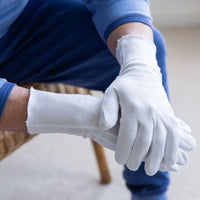
At Eczema Clothing, all of our garments are made from certified organic cotton – naturally soft, breathable and free from harsh chemicals. Our specialist eczema nightwear is designed to create a gentle barrier between your skin and everyday irritants, including pet dander that may settle on bedding or clothing.
When combined with a consistent skincare routine recommended by your healthcare professional, skin‑kind clothing can play an important role in supporting the skin barrier and improving sleep.
Products our community finds helpful
-
Organic cotton eczema nightwear for calmer sleep
-
Integrated scratch mittens and sleeves to reduce nighttime damage
-
Organic cotton daywear that’s gentle during daily pet contact
-
Carefully curated eczema‑friendly skincare
A final word
Living with eczema means making ongoing decisions about your environment, routines and lifestyle – and pets are one of the most emotionally complex parts of that picture. There’s no single right answer.
For some, pets are a manageable trigger that bring far more comfort than difficulty. For others, the impact on skin health means changes have to be made. What matters most is that you’re supported, informed and never judged for the choices you make.
You’re not alone in navigating this. Our community is full of people who’ve faced the same questions with honesty, creativity and care – and we’re here to support you, whatever your answer looks like.
This article is for information only and does not replace medical advice. Always speak to your GP or dermatologist for personalised guidance.