

Why Has My Eczema Suddenly Flared Up?
It's the question most of us with eczema have asked at some point.
Your skin has been relatively calm. You've been using the same moisturiser, eating roughly the same things and following the same routine.
Then suddenly your eczema decides it has other plans.
You're itchier. Your skin is redder. Perhaps an area you thought had finally healed has flared again.
The frustrating thing is that eczema doesn't always give us an obvious explanation.
Eczema is highly individual, and something that causes problems for one person might be absolutely fine for somebody else. There can also be several factors involved at once rather than one obvious culprit.
That said, there are certain triggers that come up again and again.
Learning to recognise yours won't mean you'll never have another flare-up, but it can give you a little more control over something that often feels incredibly unpredictable.
Here are eight common eczema triggers worth keeping an eye on.
1. Heat and Sweating
There's nothing quite like finally getting your skin comfortable and then realising you're starting to sweat.
Heat can be particularly difficult for eczema-prone skin. Sweat contains salts that can sting already irritated or broken skin, while overheating can increase that familiar urge to itch.
And unfortunately, heat can find you almost anywhere.
Exercise. Public transport. A warm office. Summer weather. Or simply getting into a bed that's slightly too warm.
Try using lightweight layers that you can easily remove and choose breathable fabrics where possible. If you've been exercising, changing out of damp clothing reasonably quickly can also help prevent sweat sitting against your skin for longer than necessary.
At night, breathable sleepwear can be particularly useful. Our organic cotton anti-scratch clothing is designed with sensitive skin in mind, using features such as soft fabrics and flat seams to help reduce unnecessary irritation.
2. Stress
Sometimes the trigger isn't something touching your skin at all.
Stress and eczema can have an incredibly frustrating relationship.
When life becomes stressful, eczema can become harder to manage. Then your eczema itself becomes another source of stress.
Before long you've created a cycle:
Stress → eczema flare → more stress → eczema becomes harder to manage.
That doesn't mean somebody can simply tell you to relax and your eczema will disappear.
If only it were that easy.
Instead, it can be useful to recognise stress as one part of the wider eczema picture. Exercise, getting outside, breathing exercises, talking to somebody or simply making time for something you enjoy may all help you manage stress.
We've explored this relationship in much more detail in our Stress & Eczema – Breaking the Cycle guide.

3. Clothing and Fabrics
Your clothes spend a lot of time against your skin.
So what they're made from and how they're constructed can matter.
Rough fabrics can create friction against sensitive areas, while some synthetic materials can trap heat and sweat. Tight waistbands, irritating seams and scratchy internal labels can create additional problems.
Wool is another fabric some people with eczema find particularly uncomfortable because its fibres can feel rough against sensitive skin.
That's why we tend to favour soft, breathable fabrics such as organic cotton.
Our article on how clothing can trigger the itch-scratch cycle takes a much closer look at the relationship between clothing, heat, friction and scratching.
The goal isn't to become frightened of your wardrobe.
It's simply to notice whether particular clothes consistently make your skin uncomfortable.
4. Soaps, Detergents and Laundry Products
Sometimes the problem isn't your clothes.
It's what you've washed them in.
Fragrances, preservatives and other ingredients found in some laundry products can irritate sensitive skin. Residue may remain on clothing after washing, meaning something you've washed your clothes in briefly can then sit against your skin for hours.
If you suspect your laundry routine might be contributing to irritation, try keeping things simple.
Use products you know your skin tolerates, avoid unnecessary fragrance and make sure clothes are rinsed thoroughly.
It's also worth remembering that fabric conditioner isn't automatically your skin's best friend just because it makes your clothes smell fantastic.
We've written a full guide on eczema and laundry detergent if you'd like to look at your washing routine in more detail.
5. Changes in Weather
Just when you've figured out how to manage your eczema in summer, winter arrives.
Weather changes can be surprisingly difficult for eczema-prone skin.
Cold winter air and indoor heating can leave skin feeling dry, while hot summer weather can bring sweating and overheating.
Then there are those wonderfully unpredictable British weeks where you somehow experience both problems within 48 hours.
You can't control the weather, but you can adapt around it.
In warmer conditions, lightweight breathable clothing may help keep you cooler. During colder weather, layering softer fabrics can help you stay warm without placing rough materials directly against your skin.
The important thing is noticing how your own eczema reacts as the seasons change.
6. Dust Mites, Pollen and Other Allergens
For some people, environmental allergens can contribute to eczema symptoms.
Dust mites can live in mattresses, bedding, carpets and soft furnishings, while pollen becomes particularly difficult during certain times of year.
Pets may also be relevant for some people.
That doesn't mean everybody with eczema needs to throw away their carpet and wave goodbye to the family dog.
Eczema triggers are individual.
But if you consistently notice symptoms changing around certain environments or seasons, it may be worth discussing allergies with your healthcare professional.
Regularly washing bedding and keeping sleeping areas clean may also help reduce exposure to some environmental allergens.

7. Scratching
This one feels slightly unfair.
Your eczema itches.
So you scratch it.
And then scratching becomes part of the problem.
Scratching can damage an already vulnerable skin barrier. That damage can contribute to more inflammation and irritation, creating the dreaded itch-scratch cycle.
The difficulty is that scratching isn't always completely conscious.
You may catch yourself doing it while watching television, working or even sleeping.
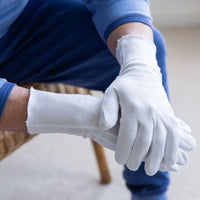
Keeping fingernails short can help reduce damage. At night, protective clothing can provide an additional barrier when you're unable to consciously stop yourself.
Our Adult Eczema Scratch Mitten T uses integral mittens alongside soft organic cotton, flat seams and no irritating internal labels to help reduce scratching damage overnight. For younger eczema sufferers, our Kids' Scratch Mitten T works on the same principle.
We've also written separately about why eczema sufferers scratch unconsciously through the night, because this particular trigger deserves a conversation of its own.
8. Your Own Individual Triggers
This might sound like we're cheating slightly with number eight.
But it's probably the most important one.
Your eczema is yours.
Some people notice problems around particular skincare products. Others might react to certain allergens, environments or activities. Some people find their eczema changes alongside hormonal fluctuations, illness or periods of particularly poor sleep.
And sometimes you genuinely won't know what caused a flare.
Keeping a simple eczema diary can help.
You don't need to document every second of your life. Just note things such as:
- When your skin flared
- Where on your body it happened
- Any new skincare or laundry products
- Unusual foods if food allergy is a concern
- What you were wearing
- Weather or temperature changes
- Stress levels
- How well you've been sleeping
Over time, patterns may start appearing.
If you think a food, allergy or another medical issue is triggering your eczema, speak to your GP, dermatologist or another appropriate healthcare professional rather than cutting foods or treatments out without advice.
You Don't Need to Control Everything
Perhaps the most frustrating thing about eczema triggers is the temptation to turn yourself into a detective.
Was it dinner?
The new jumper?
The washing powder?
The weather?
Stress?
The hotel sheets from three nights ago?
Living like that can become exhausting.
Identifying triggers is useful, but the goal isn't to create a life where you avoid absolutely everything.
It's about understanding your skin a little better.
Start with the obvious things. Pay attention to patterns. Make one change at a time where possible.
And remember that a flare-up doesn't necessarily mean you've done something wrong.
Eczema is a complex condition and even the most carefully managed skin can have difficult days.
But understanding the things that might be making those days harder gives you somewhere to start.
Sometimes a cooler bedroom helps.
Sometimes it's changing your washing detergent.
Sometimes it's choosing softer clothing.
Sometimes it's recognising that you've had an incredibly stressful week.
There probably won't be one magic answer.
But with eczema, removing several small irritations can sometimes make a very big difference.