

When You Have Eczema, Bedtime Isn't Always Relaxing
For most people, bedtime is supposed to be the easy part of the day.
Brush your teeth. Get changed. Get into bed. Sleep.
Eczema can make things slightly more complicated.
You might have been relatively comfortable all evening, only for the itching to suddenly start once you're underneath the covers. Or perhaps bedtime has become an entire operation involving creams, pyjamas, bedroom temperatures and an internal debate about whether the duvet is going to make you too hot.
And then there's the worst part.
You're finally comfortable enough to sleep and your skin decides now would be an excellent time to start itching.
If that sounds familiar, creating a consistent bedtime routine can help.
We're not talking about a perfect Instagram evening involving herbal tea, candles and an hour of meditation.
We're talking about something much more practical.
A routine that gives your skin the best chance of staying comfortable while also helping your brain recognise that it's time to switch off.
Step 1: Start Winding Down Before You Get Into Bed
A good bedtime routine doesn't begin when your head hits the pillow.
Give yourself a little time beforehand to slow things down.
That might mean putting your phone away, reading, listening to something or simply spending half an hour doing something that doesn't involve rushing around.
Why does this matter for eczema?
Because stress and eczema can be closely connected. Stress won't be the cause of everyone's eczema, but it can make symptoms harder to manage for some people.
Then eczema itself becomes stressful.
You itch. You worry about sleeping. You become frustrated that you're still awake. And suddenly you're lying in bed thinking about how tired you're going to be tomorrow.
Not exactly the recipe for a peaceful night.
You don't need to eliminate every stressful thought before bed. Just try to create a bit of separation between the busyness of the day and sleep.
Step 2: Think About Your Bath or Shower
For some people, a bath or shower forms an important part of their evening eczema routine.
But hotter isn't necessarily better.
Very hot water can leave eczema prone skin feeling dry and uncomfortable, so lukewarm water is generally a kinder option.
Try not to spend unnecessarily long in the water either.
Use the cleansers, soap substitutes or other products recommended for your skin rather than automatically reaching for heavily fragranced shower gels.
And when you're finished, don't aggressively rub yourself dry with the towel.
Gently patting the skin dry is much less dramatic, but your skin will probably thank you for it.
Step 3: Moisturise Before Bed
This is probably the least glamorous part of the routine.
But it's an important one.
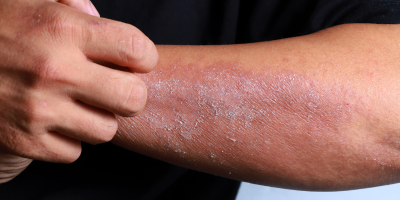
Eczema prone skin has difficulty retaining moisture effectively because its protective barrier doesn't work as well as it should.
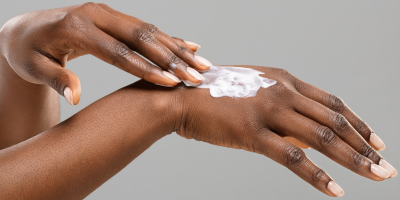
Following the moisturising and treatment routine recommended for your eczema before bed can therefore help tackle dryness before you spend several hours asleep.
If you've just had a bath or shower, applying your usual emollient soon afterwards can help lock moisture into the skin.
Use any prescribed treatments according to the instructions you've been given by your doctor, dermatologist or pharmacist.
And give everything a little time to settle before immediately putting your clothes on.
Nobody particularly enjoys putting pyjamas straight onto freshly moisturised skin.
Step 4: Choose Nightwear That Won't Fight With Your Skin
You've done your skincare.
Now don't undo all that work with irritating pyjamas.
Nightwear sits against your skin for hours, so look for something soft, breathable and comfortable.
We generally recommend organic cotton for eczema nightwear because it is soft and breathable, helping reduce some of the heat and friction that can make sensitive skin uncomfortable.
Fit matters too.
Very loose clothing can move across the skin and bunch during the night, while tight clothing can rub and feel restrictive.
Aim for something fairly close-fitting without being tight.
Our Anti-Scratch Organic Cotton PJ Set combines breathable organic cotton with eczema-friendly design features including flat seams and no irritating internal labels.
We've covered this subject in much more detail in our guide to What to Wear to Bed if You Have Eczema.

Step 5: Prepare for the Scratching You Can't Control
You can promise yourself all you like that you won't scratch tonight.
The problem is that once you're asleep, you're no longer entirely in charge.
People with eczema can scratch during lighter stages of sleep and brief awakenings without remembering doing so the following morning.
That's why night time protection can be useful if scratching is a particular problem for you.
Start with something incredibly simple: keep your fingernails short and smooth.
Then think about covering the areas you tend to scratch.
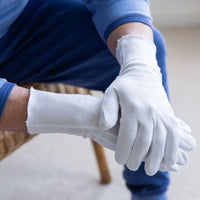
For people who cause significant damage with their fingernails overnight, our Adult Eczema Scratch Mitten T includes integral mittens designed to put soft organic cotton between your nails and your skin.
There's also a Kids' Scratch Mitten T for younger eczema sufferers.
These products don't stop eczema from itching.
They're there to help reduce the damage you can cause when you're asleep and unable to consciously stop yourself.
Our article Why Do We Scratch Eczema Unconsciously at Night? explains what's going on in much more detail.
Step 6: Cool the Bedroom Down
You've moisturised.
You've put on your breathable pyjamas.
Then you climb into a boiling bedroom underneath a thick duvet.
We've got a problem.
Heat and sweating can make eczema feel considerably itchier for some people, so bedroom temperature deserves a place in your routine.
You don't need to sleep inside a refrigerator.
Just aim for a comfortably cool room.
Think about your bedding too.
On warmer nights, you might not need the same heavy duvet you use during winter. A lighter cotton sheet or blanket may be more comfortable.
Breathable bedding can also help prevent unnecessary heat building up around the body.

Step 7: Keep the Bed Eczema-Friendly
Your pyjamas aren't the only fabric touching you for eight hours.
There's also your bedding.
Wash sheets regularly to remove the build up of skin, sweat, creams and potential allergens such as dust mites.
And pay attention to what you're washing them in.
Strongly fragranced detergents and fabric conditioners can irritate some people's skin, so use laundry products you know you tolerate well.
If you're particularly sensitive to dust mites, your mattress and bedding may deserve some extra attention too.
You don't need to turn the bedroom into a laboratory.
The aim is simply to make the place where you spend roughly a third of your life as comfortable for your skin as reasonably possible.
Step 8: Keep Your Essentials Within Reach
Sometimes you'll still wake up itchy.
That's eczema.
Instead of wandering around the house half asleep looking for something you need, prepare before bed.
Depending on your eczema routine, you might keep your usual moisturiser nearby, along with a glass or bottle of water.
You could also have spare nightwear available if you become particularly sweaty or uncomfortable.
One of our favourite hot weather eczema tricks is keeping a spare cotton pillowcase or item of nightwear somewhere cool so you've got something soothing available during an especially warm, itchy night.
The easier you make it to deal with a problem, the quicker you can hopefully get back to sleep.
Step 9: Stop Trying So Hard to Sleep
This might be the hardest step.
You've done everything right.
Your skin is moisturised. The room is cool. You're wearing comfortable nightwear.
And you're still awake.
Now you're checking the clock.
Six hours until I have to get up.
Then five.
Then four.
The pressure to sleep can become another reason you can't.
This is why a bedtime routine should be about preparation rather than perfection.
You can create the right environment.
You can look after your skin.
You can make yourself comfortable.
But you can't force yourself to fall asleep.
Once you've done what you reasonably can, try to let the routine do its job.
What Does the Perfect Eczema Bedtime Routine Actually Look Like?
Probably something much simpler than you expected.
An hour or so before bed: start winding down and reduce anything that leaves you feeling overstimulated.
Bath or shower if needed: keep the water comfortably lukewarm and be gentle with your skin.
Afterwards: follow your normal moisturising and treatment routine.
Before getting into bed: put on soft, breathable nightwear and make sure the bedroom isn't too warm.
If you scratch: keep your nails short and consider protective nightwear or integral mittens.
Then: stop thinking about eczema for the night as much as you possibly can.
That's it.
You don't need a complicated ten product skincare routine.
You don't need to optimise every minute before sleep.
And you definitely don't need to blame yourself when eczema occasionally ruins the plan.